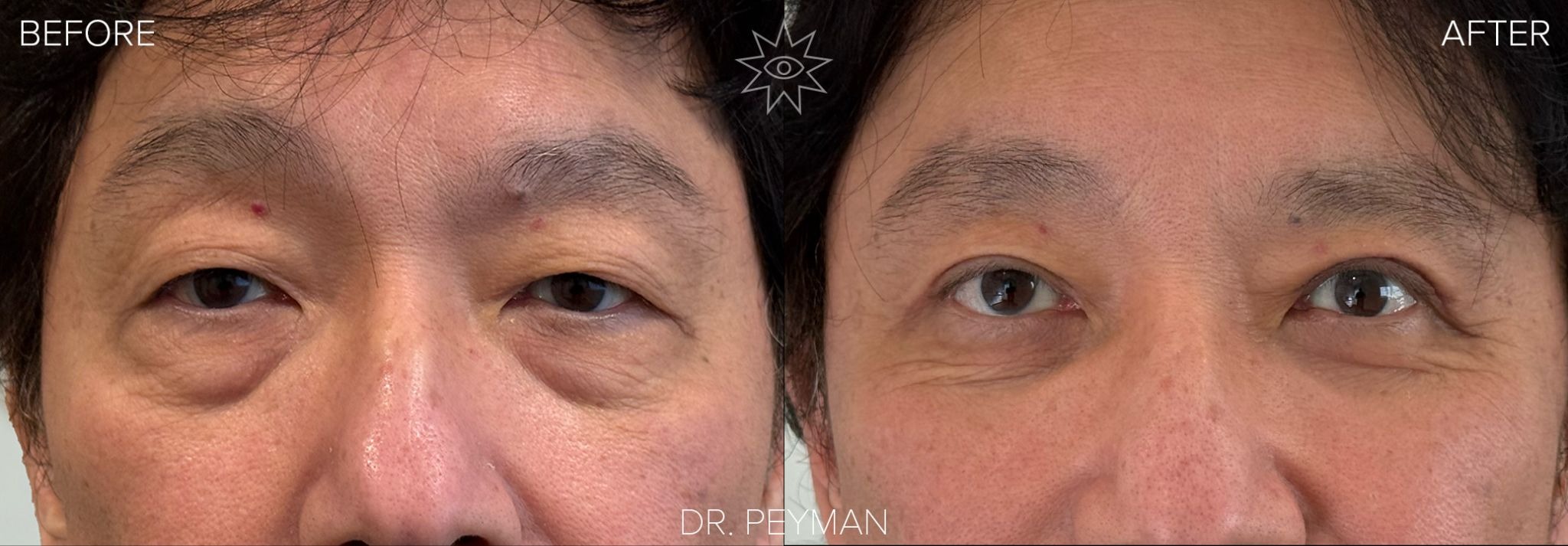
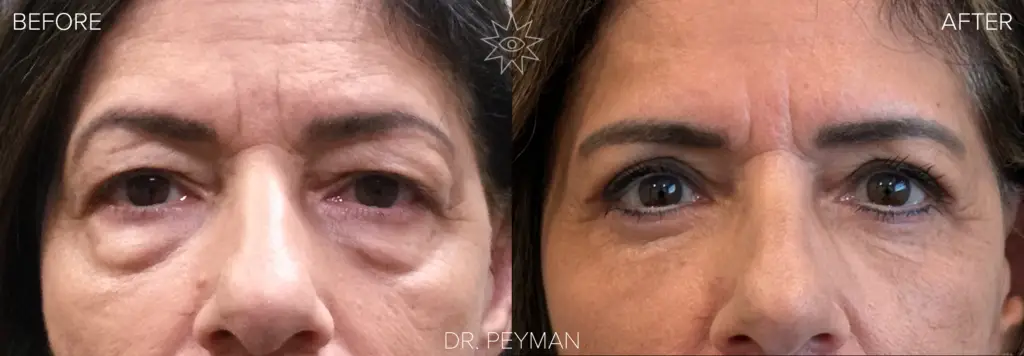
When can I hit the gym again? When can I fly? When can I drive?
These are the questions Dr. Jason Sabet-Peyman hears in nearly every consultation and every follow-up.
A few things to keep in mind as you read: recovery varies from patient to patient depending on several factors- how well you follow the pre and postoperative instructions provided, age, and genetics. The answers below reflect general guidance for most patients. Dr. Peyman will give you a personalized plan at your pre-op appointment and call you after surgery to check in directly.
Exercise and Physical Activity
When can I go back to the gym?
This is one of the most important questions to get right, because returning to exercise too soon is one of the most common causes of prolonged swelling, bruising, and even bleeding after eyelid surgery.
Walking is safe to do the day after surgery and may even be beneficial as it promotes healthy circulation without raising blood pressure significantly.
For anything more strenuous — weight training, cardio machines, cycling, running, group fitness classes — the standard guideline is two weeks minimum. Activities that significantly raise your heart rate or blood pressure increase blood flow to the face and can increase swelling, worsen bruising, and in rare cases increase the risk of bleeding around the surgical site.
What about yoga?
Standard yoga classes that involve inversions — downward dog, forward folds, headstands, poses where your head drops below your heart — should be avoided for at least two to three weeks. The increase in blood pressure to the head in inverted positions is exactly what you want to avoid in the early healing period. Gentle, non-inverted stretching is fine sooner.
When can I go swimming?
Pool swimming should be avoided for at least three to four weeks. Chlorine is an irritant to healing tissue and incision sites, and submerging your face in water carries infection risk during the early healing period. Ocean swimming carries the same concerns with the addition of salt water and bacteria.
What about golf, tennis, or recreational sports?
Low-impact recreational activities where you are not exerting yourself heavily can typically resume around two weeks. Sports with any risk of contact to the face — basketball, soccer, racquet sports with close opponents — should wait until four to six weeks, when the healing tissue is more robust.
Can I have sex after eyelid surgery?
Any activity that significantly raises your heart rate falls under the same guidance as exercise. Most patients are advised to wait at least one to two weeks before resuming sexual activity.
Work
When can I go back to work after eyelid surgery?
This depends almost entirely on what kind of work you do.
For desk work, computer-based work, or jobs where you can work from home, most patients are back within five to seven days. Some patients with very smooth recoveries return as early as three to four days, though swelling and bruising may still be visible at that point.
For jobs that involve physical activity, being on your feet for extended periods, bending, lifting, or working in environments with dust or debris, two weeks is the more realistic and safer timeline.
What if my job involves being in front of clients or on camera?
This is one of the most common considerations for professionals, teachers, salespeople, and anyone who presents in front of others regularly. By the two-week mark, most patients look significantly more normal, with only subtle residual puffiness that can often be softened with makeup. Most people returning to public-facing roles in two weeks do not attract the kind of attention they fear.
Can I work from home on my computer in the first few days?
Light screen time in short intervals is generally fine once you feel up to it, typically within two to three days. Extended screen time can cause eye fatigue and dryness during the early healing period, so take regular breaks and use lubricating eye drops as needed. Avoid staring at screens for hours at a stretch in the first week.
Travel
When can I fly after eyelid surgery?
For most patients, around 10 days or after stitches are removed, provided the recovery is going smoothly and you have been cleared at your follow-up appointment.
If you are planning a flight within the first two weeks, let Dr. Peyman know ahead of time. Take the prescribed postoperative ointment with you.
What about a cruise or boat travel?
Cruises and boat travel follow a similar timeline to flying. Most patients can travel by sea after about one to two weeks. The bigger consideration with cruises is the activity level on board — sun exposure, salt water, swimming pools, and physical excursions all need to be avoided in the early weeks regardless of how you are traveling to get there.
Can I drive to the airport or take a long car trip right after surgery?
Sitting as a passenger in a car for a long trip is generally fine within the first week as long as you are comfortable. Driving is okay when your vision has completely normalized. The ointment used along the upper eyelids in the first few weeks can make the vision blurry.
Driving
When can I drive after eyelid surgery?
Most patients can return to driving within a few days of surgery whenever their vision completely returns to normal and the effects of the valium have completely worn off. If you have any doubt, wait another day or two.
Everyday Life
When can I shower and wash my face?
You can shower 2 days after surgery as long as you keep water away from your eyes and face. Most patients find it easier to wash hair in the sink or tilt the head back in the shower for the first few days. You can gently wash your face while avoiding the stitches using a soft wash cloth starting around day three to five. Make sure not to rub or pull on the eyelid stitches while cleaning or drying the skin.
When can I wear makeup?
Most patients can start applying makeup to the face and skin around the eyes at around two weeks, once any external sutures have been removed and the incision sites are sufficiently healed. Foundation and concealer can be helpful at this stage for softening any residual bruising. Avoid applying mascara or eyeliner directly on the lash line until you have been cleared to do so, typically around the two to three week mark.
When can I wear contact lenses?
Contact lenses should be avoided for at least two weeks after surgery. Inserting contacts requires you to pull on the eyelid, which puts stress on healing tissue. Your eyes may also be drier than usual during the healing period, making contact wear uncomfortable. Glasses are a much better option in the early weeks and have the added benefit of providing some protection for your eyes in public.
When can I sleep on my side?
Sleeping on your back with your head elevated is the recommended position for the first one to two weeks after surgery. Sleeping on your side increases the risk of swelling on the dependent side and can put pressure on the healing area. Most patients can return to their preferred sleep position after two weeks, though sleeping with the head slightly elevated continues to help with swelling for several weeks.
When can I drink alcohol?
Alcohol should be avoided for at least one week after surgery. Alcohol causes vasodilation, which increases blood flow and can worsen swelling and bruising. It also thins the blood, which is not ideal in the early post-operative period, and it can interact with any medications you may be taking.
When can I wear glasses or sunglasses?
Sunglasses can generally be worn immediately after surgery and are actually encouraged when going outside, both to protect the healing tissue from sun exposure and to provide some privacy while swelling is visible. Standard glasses that rest on the nose and ears rather than putting pressure directly on the eyelids are also fine from early on.
When can I use eye drops?
Most over the counter and prescribed eye drops or okay to continue after surgery. This will be discussed at your preoperative appointment. When placing drops in your eyes postoperatively, remember not to pull on the eyelids to drop them in as this can disrupt the stitches.
When can I get a facial, facial massage, or cosmetic treatment near the eyes?
Facials, facial massages, and any skin treatments near the eye area should wait at least four to six weeks. Pressure or manipulation around the healing eyelids before the tissue has fully matured can disrupt results and cause unnecessary swelling. Botox and filler in the eye area should similarly wait until you are fully cleared at a follow-up, which is typically no sooner than four weeks.
Signs That Something Needs Attention
Most of what you will experience in the days after surgery — swelling, bruising, mild tightness, occasional blurry vision from ointment — is completely expected and resolves with time.
Contact Dr. Peyman’s office if you notice any of the following:
- Significant increasing pain or pressure around the eyes
- Any hematoma formation around the eyes
- Sudden increase in swelling or bruising after an initial improvement
- Any change in vision beyond normal blurriness from ointment
- Discharge that is not clear
- Redness that is spreading rather than improving
- Feeling of excessive dryness or eye irritation
Dr. Peyman calls every patient after surgery to check in. If something concerns you at any time during your recovery, you are always welcome to reach the office directly at 714-449-1940, even after hours and/or on weekends.
Signs That Something Needs Attention
Most of what you will experience in the days after surgery — swelling, bruising, mild tightness, occasional blurry vision from ointment — is completely expected and resolves with time.
Contact Dr. Peyman’s office if you notice any of the following:
- Significant increasing pain or pressure around the eyes
- Any hematoma formation around the eyes
- Sudden increase in swelling or bruising after an initial improvement
- Any change in vision beyond normal blurriness from ointment
- Discharge that is not clear
- Redness that is spreading rather than improving
- Feeling of excessive dryness or eye irritation
Dr. Peyman calls every patient after surgery to check in. If something concerns you at any time during your recovery, you are always welcome to reach the office directly at 714-449-1940, even after hours and/or on weekends.
Recovery Timeline at a Glance
| Activity | Typical Return Timeline |
| Light walking | 1 to 2 days |
| Showering making sure to keep the eye area dry | 14 days |
| Driving | 2 to 3 days |
| Desk / computer work | 1 to 2 days |
| Short-haul flying | 10-12 days |
| Alcohol cessation | 7 days |
| Makeup (face and around eyes) | 14 days |
| Contact lenses | 14 days |
| Head of bed elevation | 14 days |
| Gym / strenuous exercise | 14 days |
| Swimming (pool or ocean) | 3 to 4 weeks |
| Facials / eye area treatments | 4 to 6 weeks |
| Botox / filler near eyes | 4 to 6 weeks |
Ready to Plan Your Surgery?
Dr. Jason Sabet-Peyman is a board-certified ophthalmologist and fellowship-trained oculofacial plastic surgeon who focuses exclusively on eyelid surgery. From his private office in Fullerton, he performs a variety of procedures, including upper blepharoplasty, lower blepharoplasty, upper & lower blepharoplasty, and ptosis repair for patients across Orange County, including Fullerton, Anaheim, Brea, Yorba Linda, Irvine, Newport Beach, Laguna Beach, and Huntington Beach.
If you are considering eyelid surgery and want to understand exactly what your recovery would look like for your specific procedure and lifestyle, a consultation is the best place to start.
Call 714-449-1940 or use the contact form on our website to schedule your consultation with Dr. Peyman.