You worked hard to lose the weight. Maybe you used Ozempic, Wegovy, or Mounjaro. Maybe it was Zepbound, Saxenda, or another GLP-1 medication. The number on the scale is finally where you want it, and that part feels great.
But then you look in the mirror and something is off. Your face looks more tired. More hollow. Older, somehow, than it did before you lost the weight. Friends are congratulating you on the weight loss while you’re quietly wondering why you suddenly look so drawn around the eyes.
You are not imagining it. And you are not alone.
What GLP-1 Weight Loss Drugs Do to Your Face
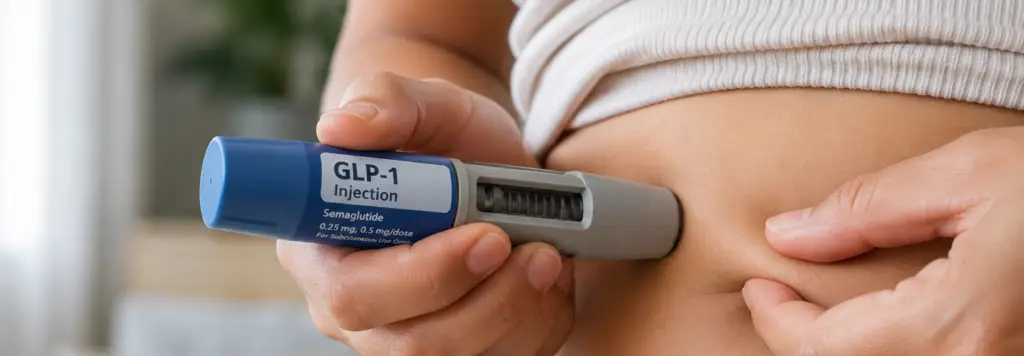
GLP-1 receptor agonists like Ozempic and Wegovy work by suppressing appetite and slowing digestion, which leads to significant, sometimes rapid, weight loss. That’s the goal. But fat doesn’t just leave your belly and thighs. It leaves your face too, and the face doesn’t always respond kindly to losing volume quickly.
This has become common enough that doctors and patients started calling it “Ozempic face” — a term that describes the hollowed, aged appearance that can develop after significant GLP-1-driven weight loss. Dermatologists, plastic surgeons, and oculoplastic surgeons are seeing it regularly now.
The core issue is this: facial fat is structural. It fills out your cheeks, supports your brows, cushions the area around your eyes, and keeps your skin looking smooth and taut. When that fat disappears faster than your skin can adapt, you can be left with deflation, sagging, and shadows in places that used to look full and rested.
The Drugs Most Commonly Associated with This
If you’ve lost a significant amount of weight using any of the following, facial changes including around the eyelids are worth paying attention to:
- Ozempic (semaglutide, originally approved for type 2 diabetes)
- Wegovy (semaglutide, higher dose, approved for weight loss)
- Mounjaro (tirzepatide, approved for type 2 diabetes)
- Zepbound (tirzepatide, approved for weight loss)
- Saxenda (liraglutide)
- Victoza (liraglutide, lower dose)
- Trulicity (dulaglutide)
- Rybelsus (oral semaglutide)
These are all GLP-1 receptor agonists, or in the case of Mounjaro and Zepbound, GLP-1/GIP dual agonists. The mechanism of facial change is the same across all of them: significant fat loss that includes the face.
What Specifically Happens Around the Eyes
The eye area is one of the first places where facial volume loss becomes visible, and it’s also one of the most dramatic. Here’s what tends to happen:
Upper eyelids look heavier and more hooded
There is a layer of fat beneath the brow and along the upper orbital rim that helps support the brow and keep it in a natural position. When that fat shrinks, the brow can descend. A lower brow pushes more skin downward onto the upper eyelid. Skin that was previously sitting in a normal position now folds over the crease and crowds the eye. Patients who had mild upper lid hooding before weight loss can find it becomes much more noticeable afterward.
Under-eye hollows become more pronounced
The lower eyelid area has its own fat compartments. In younger faces, these fat pads sit smoothly behind the lid and give the under-eye area a full, rested look. As we age, those fat pads can shift forward and create bags. But with rapid weight loss, the opposite can happen. As the face deflates, the under eye bags may appear to be more visible, along with hollowing and dark circles. The transition from the lower lid to the cheek becomes shadowed and concave. Some patients describe it as looking almost skeletal around the eyes even though they feel healthy.
Excess upper eyelid skin becomes more obvious
Skin doesn’t shrink as fast as fat does. When the volume underneath disappears, skin that was previously filled out can bunch, fold, and drape in ways it didn’t before. For the upper eyelid, this can mean skin sitting on the lashes, a loss of the visible eyelid platform, and a heavier, more tired expression overall.
The brow sits lower
Without the fat cushion beneath it, the brow loses its lift and structural support. Even a small amount of brow descent changes the entire upper face. It can make someone look more stern, more tired, or simply older than they did before the weight loss.
Why This Catches People Off Guard
Most people going into GLP-1 treatment are focused entirely on body weight. The facial changes aren’t always mentioned upfront, and they can develop gradually over months as the weight comes off. By the time someone notices, they’ve already lost a significant amount and the facial changes are well established.
It’s also counterintuitive. Weight loss is supposed to make you look better and younger, and for the body it often does. The disconnect between how someone feels physically versus how their face looks in the mirror can be genuinely frustrating.
There’s also a specific challenge with the eye area. The eyes are the first thing people focus on in a face. Hollowing, drooping, and shadowing around the eyes can make someone look exhausted or unwell even when they’re the healthiest they’ve been in years. It undercuts the confidence that came with losing the weight in the first place.
What Can Be Done About It
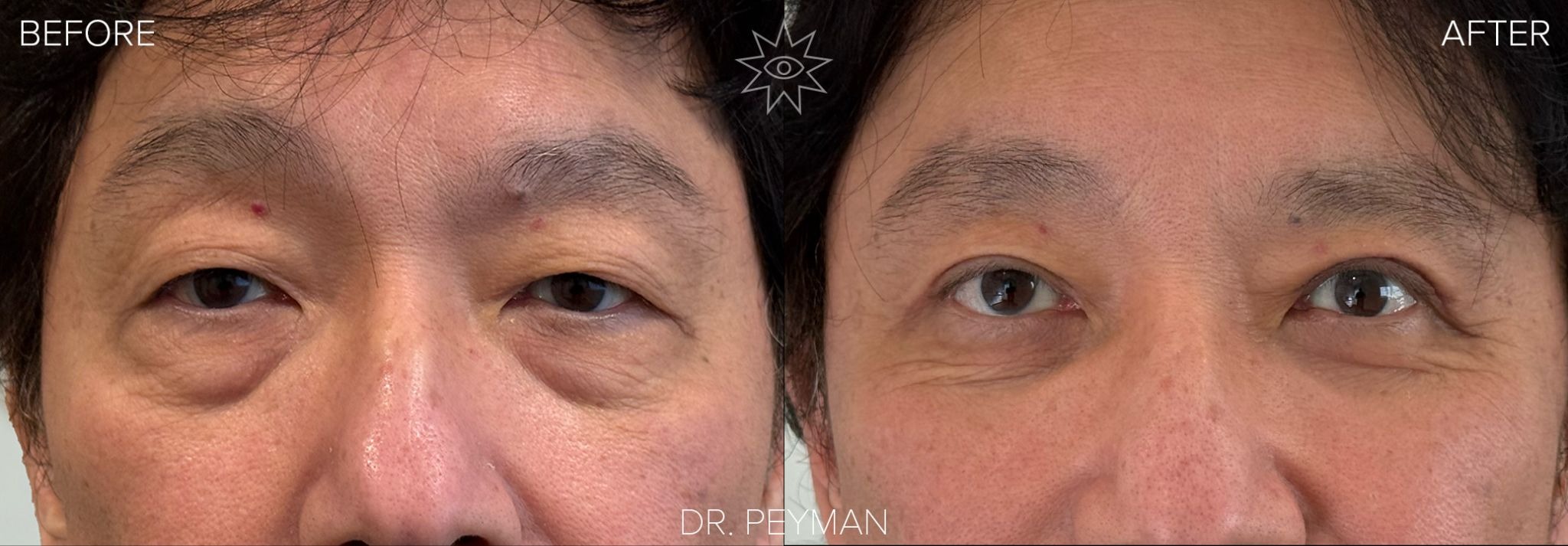
The good news is that the changes around the eyelids are very treatable. At Fresh Eyelids in Fullerton, Dr. Jason Sabet-Peyman specializes exclusively in the eyelid and periocular area, which puts him in a specific position to address exactly what GLP-1-related volume loss does to the eye area.
Upper eyelid blepharoplasty can remove the excess skin that is now drooping over the lashes and crowding the eye. The procedure is performed in the office under local anesthesia, takes about 45 minutes, and removes the skin that the volume loss has left behind. The result is a more open, rested eye without looking done or pulled.
Lower eyelid blepharoplasty addresses the bags that may become more prominent after the facial volume loss, hollowing, shadowing under the eyes. Depending on your anatomy, Dr. Sabet-Peyman may reposition existing fat, smooth the lid-to-cheek transition, or address excess skin. The goal is a smoother, more continuous contour from the lower lid into the cheek.
These procedures are not about reversing the weight loss or making someone look like they used to look. They’re about bringing the eye area into balance with how the rest of the body looks and feels after a major transformation.
Is Surgery the Only Option?
Fillers are sometimes used to address volume loss in the face after weight loss, including around the eyes. Tear trough filler can temporarily soften under-eye hollowing. Some patients do well with this approach, especially if the volume loss is mild.
That said, fillers around the eyes require precision and carry their own risks when placed incorrectly. And for patients with significant upper eyelid skin excess or structural drooping, filler won’t address the underlying issue. A consultation with a specialist is the most straightforward way to understand which approach actually fits your anatomy.
When to Consider a Consultation
You don’t need to be at a certain age or have lost a specific amount of weight to have a conversation about this. If you’ve been on a GLP-1 medication and you’ve noticed that your eyes look more tired, more hooded, or more hollow than they did before, it’s worth getting a professional opinion on what’s actually driving that change and what the realistic options are.
Dr. Jason Sabet-Peyman is a board-certified ophthalmologist and fellowship-trained oculoplastic surgeon. His practice at Fresh Eyelids in Fullerton focuses exclusively on the eyelid and periocular area, serving patients from across Orange County including Fullerton, Anaheim, Brea, Placentia, Yorba Linda, Irvine, Newport Beach, and Huntington Beach.
If your face isn’t keeping up with the rest of your transformation, a consultation is a good place to start.
Schedule a consultation with Dr. Sabet-Peyman at Fresh Eyelids in Fullerton. Call our office or use the contact form on our website to get started.