Have you ever been told out of nowhere that you look angry, tired, or unapproachable, even when you feel perfectly fine? If this happens to you regularly, the problem may have nothing to do with your mood. It may have everything to do with your eyelids.
Heavy, drooping upper eyelids are one of the most commonly overlooked reasons why people are misread by those around them every single day. And for many patients right here in Orange County, a targeted upper blepharoplasty is the solution that finally lets their face match how they actually feel on the inside.
The Before: When Your Eyelids Tell a Different Story
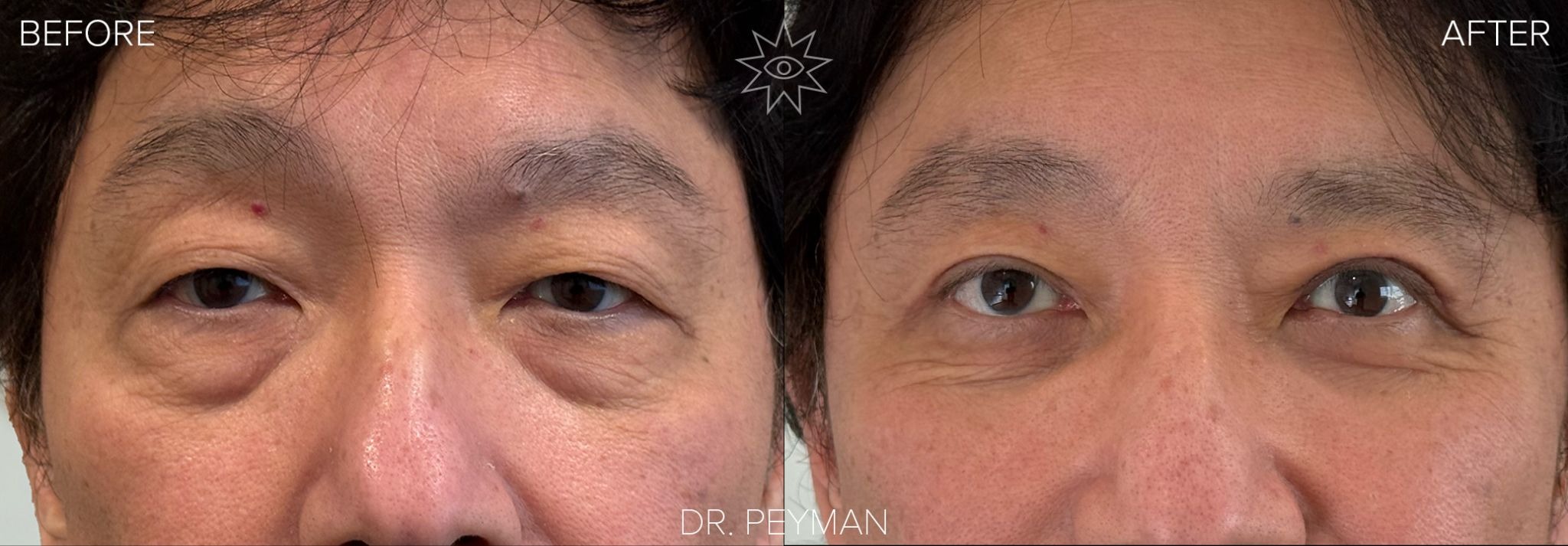
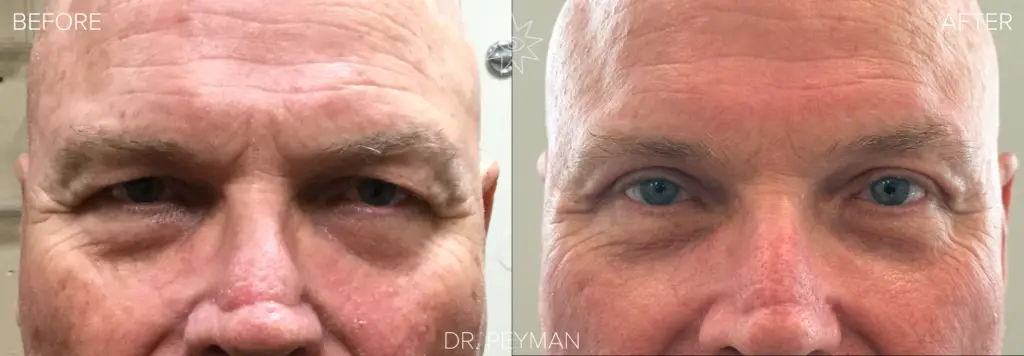
Looking at this patient’s before photo, the impact of heavy upper eyelids on facial expression is impossible to ignore. Both upper eyelids had accumulated a significant amount of excess skin over time, a condition called dermatochalasis, causing the skin to droop heavily downward and rest almost directly on the lashes.
The result is an expression that reads as stern, intense, and unapproachable, none of which reflect who this patient actually is. But because the heavy skin is pulling the entire upper eyelid area downward, it creates a shadow over the eyes and a furrowed, weighted look that most people around him would instinctively read as frustration or anger.
The Forehead Compensation Habit
One of the most telling signs in his before photo is the deep forehead wrinkles visible above his brows. This is not just aging. When upper eyelids become heavy enough, the brain subconsciously recruits the forehead muscles to help lift the brows upward in an attempt to keep the eyes open. Over time this constant straining creates deep horizontal forehead lines and can contribute to chronic headaches and brow fatigue. Many patients do not even realize they are doing it until after surgery, when they notice their forehead finally feels relaxed for the first time in years.
The Solution: Upper Blepharoplasty to Restore Your Natural Expression
Dr. Peyman performed an upper blepharoplasty to carefully remove the excess skin that had been weighing down both upper eyelids. The incision is placed precisely within the natural eyelid crease so that once healed, any scarring is virtually invisible. The goal is not to create an artificially wide or surprised look but to lift the eyelid back to the natural, rested position it held years earlier.
The procedure itself is performed under local anesthesia in our Fullerton office, and most patients are comfortable and relaxed throughout. Recovery is typically smooth, with most patients returning to light daily activities within one to two weeks.
The After: A Complete Shift in Expression
The transformation in this patient’s after photo goes far beyond looking younger or more refreshed. His entire expression has changed.
His eyes are now fully open, bright, and clearly visible for the first time in years. The heavy skin that was casting a shadow and pulling everything downward is gone. But the most striking difference is not cosmetic at all. He has gone from looking stern and unapproachable to looking warm, friendly, and completely at ease. His forehead is visibly more relaxed because he no longer needs to strain to keep his eyes open.
He did not change who he is. His face can finally show it.
You Are Not Alone: The Social Impact of Heavy Eyelids
The experience of being told you look angry or tired when you feel neither is far more common than most people realize. Heavy upper eyelids affect men and women of all ages and backgrounds across Orange County, and the social consequences are real.
Patients tell us they have been passed over for promotions because colleagues assumed they were disengaged. Others share that friends and family regularly check in asking if they are upset about something. Some describe feeling invisible in social situations because their expression never seems to invite conversation.
None of this is a reflection of their personality. It is simply the result of eyelid skin that has gradually and silently changed the way the world perceives them.
Is Upper Blepharoplasty Right for You?
If any of the following sounds familiar, you may be a candidate for upper blepharoplasty with Dr. Peyman:
- People frequently ask if you are angry, tired, or upset when you are not
- Your upper eyelids feel heavy by the end of the day
- You find yourself raising your eyebrows or straining your forehead to see clearly
- Photos of yourself look more serious or stern than you feel
- You feel like your eyes no longer reflect your personality
FAQ: Upper Blepharoplasty and Heavy Eyelids
Why do heavy eyelids make people look angry?
When excess skin droops over the upper eyelid, it pushes the lid downward and creates a shadow across the eye. This shadow and the downward pull of the skin mimic the same visual cues the brain associates with a furrowed, angry expression, even when the person is completely relaxed and in a neutral mood.
What is dermatochalasis?
Dermatochalasis is the medical term for excess upper eyelid skin that accumulates with age. As the skin loses elasticity over time it begins to sag and droop over the eyelid crease. In some cases it can rest on the lashes or even block the upper visual field.
Will upper blepharoplasty change how I look?
The goal of upper blepharoplasty is not to change your appearance but to restore it. Results should look completely natural, as though you simply look more rested and alert. Most people who know you will notice something is different but will not be able to identify exactly what changed.
How long does upper blepharoplasty take?
The procedure typically takes about one hour and is performed under local anesthesia in our Fullerton office. Most patients are comfortable throughout and go home the same day.
How long is the recovery?
Most patients feel comfortable at home within the first few days and return to light activities within one to two weeks. Swelling and bruising typically resolve within two to three weeks.
Can upper blepharoplasty be covered by insurance?
If your upper eyelids are drooping severely enough to block your peripheral or central vision, the procedure may qualify as a medically necessary ptosis or dermatochalasis repair and could be covered by insurance. This will be determined during your consult.
How do I know if I am a good candidate?
The best way to find out is to schedule a consultation with Dr. Peyman. During your visit he will evaluate your eyelid anatomy, review your goals, and recommend the most appropriate approach for your specific situation.
How long do the results last?
Upper blepharoplasty results are long lasting. While the natural aging process continues, most patients enjoy their results for ten years or more before any additional treatment might be considered.
Schedule Your Consultation in Fullerton, CA
If heavy eyelids are changing the way the world sees you, you do not have to simply accept it. Dr. Peyman serves patients from across Orange County including Fullerton, Newport Beach, Irvine, Yorba Linda, Laguna Beach, and surrounding communities.
Call our Fullerton office today at 714-449-1940 to schedule your consultation. Ask for Meagan and she will be happy to answer your questions and get you set up with an appointment.
Dr. Jason Sabet-Peyman is a board-certified ophthalmologist and fellowship trained oculofacial surgeon with over 10 years of experience specializing exclusively in plastic and reconstructive surgery of the eyelids and surrounding facial structures. His practice is located in Fullerton, CA and serves patients throughout Orange County.