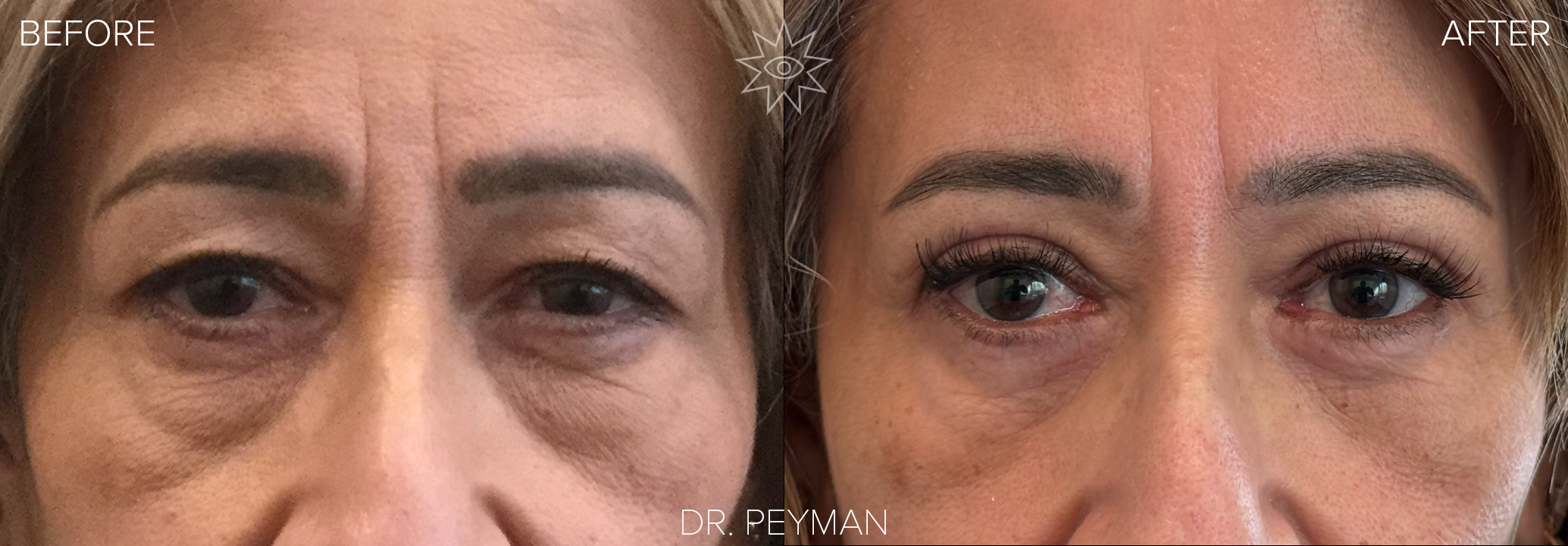
For patients considering cosmetic eyelid surgery, one of the most pressing questions is, “How long will I be in recovery?” The thought of weeks of visible bruising and swelling can be a major deterrent. We understand this concern completely. What if recovery wasn’t what you expected? What if you could look refreshed and socially ready in just seven days?
With modern, minimally-invasive techniques, this is becoming a reality for many patients.
Case Study: A Remarkable One-Week Result
A recent patient came to us with a common concern: persistent under-eye bags that made him look tired, regardless of how much rest he got. He was ready for a solution but anxious about the recovery process.
Dr. Jason Sabet-Peyman performed a lower eyelid blepharoplasty. The “after” photo in this post was taken just one week following the procedure. As you can see, the results are stunning. The puffy, tired appearance is gone, replaced by a smooth, natural, and youthful contour. Most remarkably, there are virtually no tell-tale signs of surgery—no significant bruising or swelling. This patient was able to enjoy their revitalized look almost immediately.
How is Such a Rapid Recovery Possible? The Transconjunctival Technique
This incredible one-week transformation is made possible by a specific, advanced surgical method: transconjunctival blepharoplasty.
Unlike traditional approaches, this technique requires no external skin incision. Instead, Dr. Sabet-Peyman makes a small, hidden incision on the inside of the lower eyelid. Through this opening, he can meticulously access and remove or reposition the fat pads that cause under-eye bags.
The benefits of this internal approach are immense:
- No Visible Scarring: Because the incision is inside the eyelid, it is completely invisible.
- Less Trauma: By not cutting through the skin and orbicularis oculi muscle, there is significantly less trauma to the surrounding tissues.
- Faster Healing: Less trauma naturally leads to less bruising and swelling, allowing for a much quicker, more comfortable recovery.
Why Your Surgeon’s Expertise is Critical for a Fast Recovery
Achieving a rapid recovery is not just about the technique; it’s about the surgeon wielding it. Dr. Jason Sabet-Peyman’s credentials as a board-certified ophthalmologist and fellowship-trained oculoplastic surgeon are key. His extensive, Duke-trained expertise ensures a meticulous and delicate touch that minimizes tissue disruption. This surgical artistry is fundamental to both a beautiful, natural outcome and a swift recovery.
Frequently Asked Questions
- Is a one-week recovery guaranteed for everyone? While this patient’s result is a testament to what is possible, recovery experiences can vary. However, the transconjunctival technique consistently leads to a significantly faster and more comfortable healing process than traditional methods. Dr. Sabet-Peyman’s goal is always to get you back to your life as quickly and safely as possible.
- Am I a good candidate for the transconjunctival approach? This technique is ideal for patients whose primary concern is excess fat (puffiness) under the eyes, with good skin elasticity. If significant excess skin also needs to be removed, a different incision may be recommended. Dr. Sabet-Peyman will determine the perfect approach for you during your consultation.
- What can I do to ensure my recovery is as fast as possible? Following post-operative instructions is crucial. This typically includes using cold compresses, keeping your head elevated, avoiding strenuous activity, and attending your follow-up appointments. Your commitment to these guidelines plays a huge role in a smooth recovery.
Discover Modern Eyelid Rejuvenation in Orange County
You don’t have to plan for weeks of hiding away to rejuvenate your appearance. If you are in Fullerton or the greater Orange County area, we invite you to learn more about our advanced approaches to eyelid surgery.