I just look tired.
That’s what many people tell themselves when one eyelid sits lower, one eye always looks smaller in photos, or makeup never goes on evenly. They assume it is “just aging” or bad lighting—not a real eyelid problem.
For some, that “sleepy eye” is actually ptosis, a droopy upper eyelid caused by a weak or stretched lifting muscle. Instead of simply having extra skin, the lid itself hangs lower over the eye, making you look more tired than you feel and sometimes even affecting your vision.
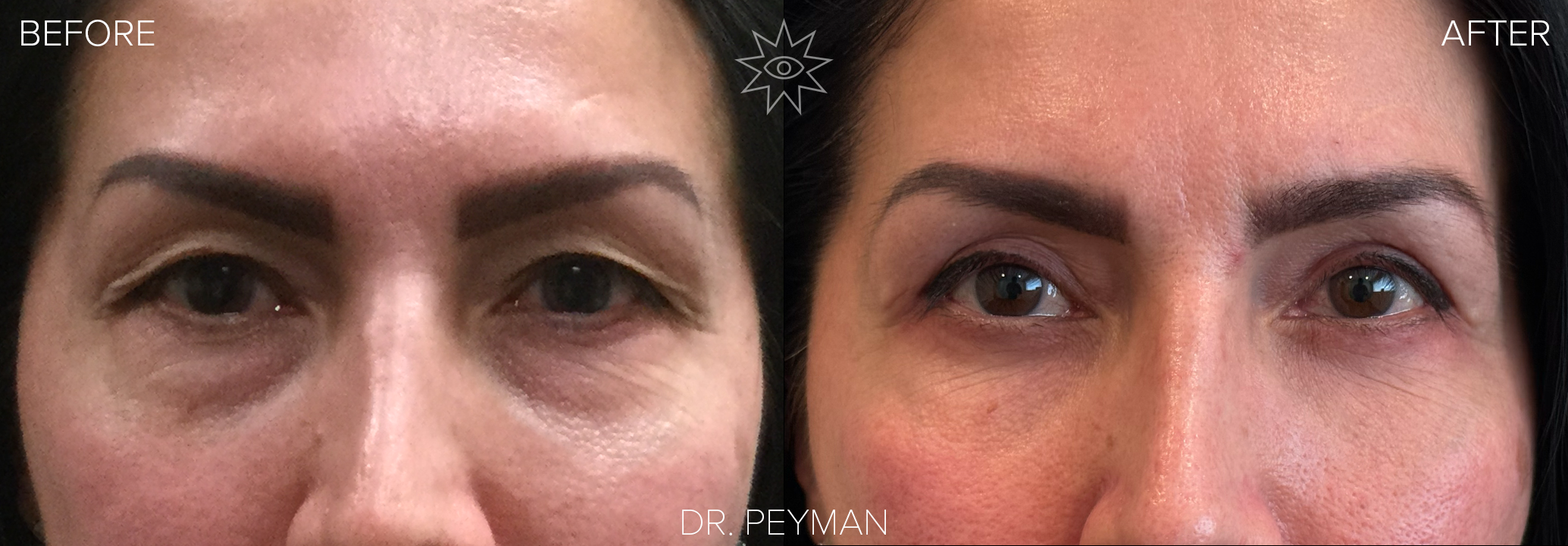
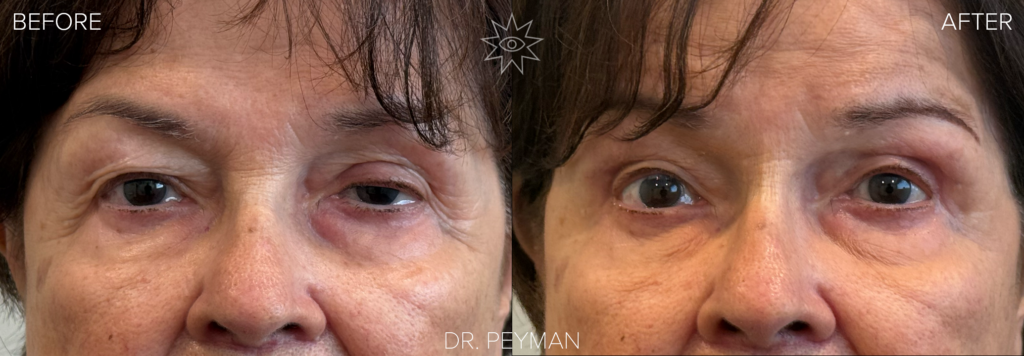
In this case, our patient had lived with a tired, uneven gaze for years. She was used to tilting her head, lifting her brows, and deleting photos she didn’t like. What she didn’t realize was that she was dealing with true ptosis—not just getting older.
When a ‘sleepy eye’ is more than aging
Mild ptosis can be easy to miss. It often shows up as one eye that:
- Always looks a little smaller or more closed
- Has more upper eyelid “platform” exposure because it is lower
- Makes glasses or photos look crooked because one lid sits lower
Friends might say you look exhausted or upset, even on days you feel perfectly fine. Over time, that disconnect between how you feel and how you look can chip away at your confidence.
Our patient described feeling like her face no longer matched her energy. She avoided close‑up photos, worried she looked unfriendly, and felt that makeup only highlighted the imbalance between her eyes. She came in “just to ask” if anything could be done—without realizing that ptosis repair was exactly designed for this problem.
Ptosis vs. extra eyelid skin: why the difference matters
It is important to understand the difference between extra skin and ptosis:
- Extra skin (hooding): The skin and soft tissue above the eyelid become heavy, creating folds that can cover the crease or lashes.
- Ptosis: The eyelid margin itself sits lower because the muscle that lifts the lid is weak or stretched, physically blocking more of the pupil.
Blepharoplasty (eyelid lift) is excellent for removing extra skin. Ptosis repair is designed to adjust and strengthen the lifting muscle so the eyelid can open to a more natural, balanced position. In some cases, both procedures are combined for the best functional and cosmetic result.
During her consultation, Dr. Jason Sabet‑Peyman carefully measured this patient’s eyelid position, muscle strength, and did visual field testing. These specific measurements captured the difference between the eyes. The goal was not to “change her eyes,” but to raise the droopy lid to achieve better balance.
A subtle change that makes a big difference
In her before photo, you can see how one upper eyelid sits lower, making that eye appear more closed and tired. After ptosis repair, her eyelid lifts to a more natural height, revealing more of the eye and creating a brighter, more balanced gaze while still looking like herself.
Patients are often surprised by how subtle the change looks to others—and how big it feels to them. Once the droopy lid is corrected, they often notice:
- Their eyes look more awake and symmetrical
- Makeup applies more evenly
- They feel more confident in photos and face‑to‑face conversations
This patient shared that people told her she looked “rested” and “refreshed,” not “different.” That is the goal of ptosis repair in skilled hands: to help you look more like the energetic, engaged person you already are, without drawing attention to the surgery itself.
When to consider a ptosis evaluation
You do not have to wait until vision is severely affected to ask whether ptosis is playing a role. It may be worth scheduling a consultation if you notice that:
- One eyelid consistently looks lower or smaller in every photo
- You raise your brows or tilt your chin up to see better
- Eye strain or fatigue is worse by the end of the day
- Makeup seems to “disappear” on one eyelid but not the other
During an exam, Dr. Sabet‑Peyman can differentiate between ptosis and simple hooding, explain whether you may benefit from ptosis repair, and outline a plan tailored to your anatomy and goals.
Ptosis repair in Orange County
If you recognize yourself in this story—always deleting photos, feeling like one eye gives you a “tired” or “sleepy” expression—it may be time to learn whether ptosis repair can help.
Dr. Jason Sabet‑Peyman is a fellowship‑trained oculofacial plastic surgeon who focuses exclusively on the delicate structures around the eyes. His practice serves patients throughout Orange County, including Fullerton, Newport Beach, Laguna Beach, Irvine, Yorba Linda, and Huntington Beach.
If a droopy eyelid is making you look more tired or uneven than you feel, a thoughtful, precise evaluation can help you understand your options and decide what feels right for you.