Many people live for years with one eyelid that sits lower than the other. They are used to tilting their head, raising their brows, or deleting photos where the droopy lid is obvious. Sometimes they tell themselves it is “just aging.” Other times they simply do not realize there is a specific condition called ptosis and a precise way to correct it.
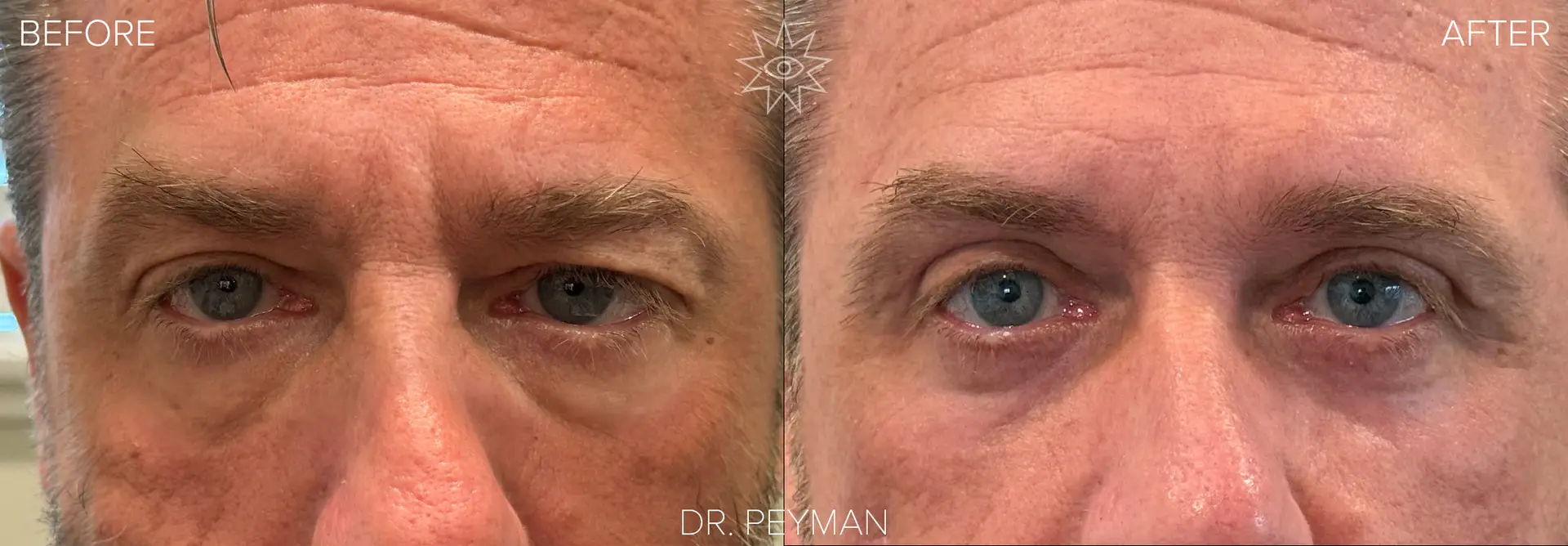
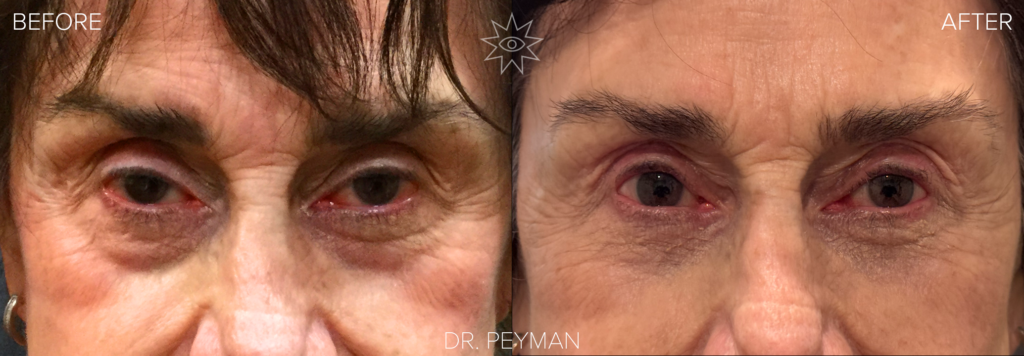
In this case, the patient had heavy eyelids on both sides with one upper eyelid that hung lower, making that eye look smaller and more closed compared with the other side. After ptosis repair, combined with carefully planned upper eyelid surgery, the eyelid margin sits higher, both eyes look more open, and the asymmetry between sides is noticeably reduced while her overall eye and brow shape remain natural.
What ptosis actually is, and why it matters
Ptosis is a true drooping of the upper eyelid itself. The lifting muscle that opens the lid becomes stretched or weak, so the eyelid margin hangs lower over the eye and can partially cover the pupil.
This is different from:
- Extra skin or “hooding,” where loose skin drapes over the crease
- Brow descent, where the eyebrow sinks lower and pushes the lid down
When ptosis is present, patients may notice:
- One eye always looks smaller or “sleepier” in photos
- People ask if they are tired or upset, even when they feel fine
- Difficulty seeing in certain directions, or needing to raise the brows or tilt the chin to see better
- Eye strain or fatigue by the end of the day
Left untreated, ptosis can affect not only appearance but also comfort and, in some cases, the peripheral vision.
How ptosis repair changes the eyes, without changing who you are
Ptosis repair is designed to adjust and strengthen the eyelid lifting mechanism so the lid can open to a more natural position. During surgery, Dr. Jason Sabet Peyman tightens or reattaches one of the muscles that lift the eyelid, so the eyelid margin sits higher and matches the other side as closely as possible.
In this patient’s after photo, you can see that:
- The previously droopy lids are lifted, so they look more open.
- The eyelid heights are more balanced from side to side.
- The brow position and natural eye shape are preserved.
The goal is not to create a “wide eyed” or surprised look. Done well, ptosis repair simply restores the eyelid to where it used to be so that friends might say “You look more awake” rather than “You look like a different person.”
In some cases, ptosis repair is combined with a small amount of upper eyelid skin removal to address hooding at the same time. That allows the lid margin and the surrounding skin to be in harmony.
Why it is worth addressing a droopy eyelid
Fixing ptosis is about more than looks. Patients often report benefits such as:
- Less effort required to keep the eyes open, especially later in the day
- A more balanced facial expression that feels closer to how they actually feel
- Improved confidence in photos, video calls, and face to face conversations
- In some cases, improved peripheral vision when the lid is no longer blocking part of the pupil
For many people, the emotional impact is significant. They no longer feel that one eye is “letting down” the rest of their face.
Ptosis repair alone, or combined with eyelid surgery?
Some patients need isolated ptosis repair, where the only problem is the droopy eyelid margin. Others, like this patient, also have extra skin or hooding around the upper lids. In those cases, Dr. Sabet Peyman can combine ptosis repair with upper eyelid blepharoplasty so that:
- The eyelid position is corrected and the eyelids open more completely.
- Extra skin is excised to match the new lid position.
This combined approach can create a more polished, natural balance between function and appearance.
If you are unsure whether your issue is ptosis, hooding, or both, Dr. Sabet Peyman’s earlier guide, “Is It a Droopy Eyelid (Ptosis) or Just Hooding? A Specialist’s Guide,” can be a helpful starting point.
Ptosis repair in Fullerton and Orange County
If one of your eyelids always looks lower or more closed, and you are tired of hearing that you look tired or upset, it may be time to find out whether ptosis is the cause.
Dr. Jason Sabet Peyman is a fellowship trained oculofacial plastic surgeon who focuses exclusively on eyelid and periocular surgery. In his office in Fullerton, he performs ptosis repair, upper and lower blepharoplasty, and combined functional and cosmetic eyelid procedures for patients across Orange County, including Fullerton, Newport Beach, Laguna Beach, Irvine, Yorba Linda, and Huntington Beach.
A consultation with Dr. Sabet Peyman can help you understand whether your droopy eyelid is ptosis, how it can be corrected, and what kind of natural, symmetric result you can realistically expect.