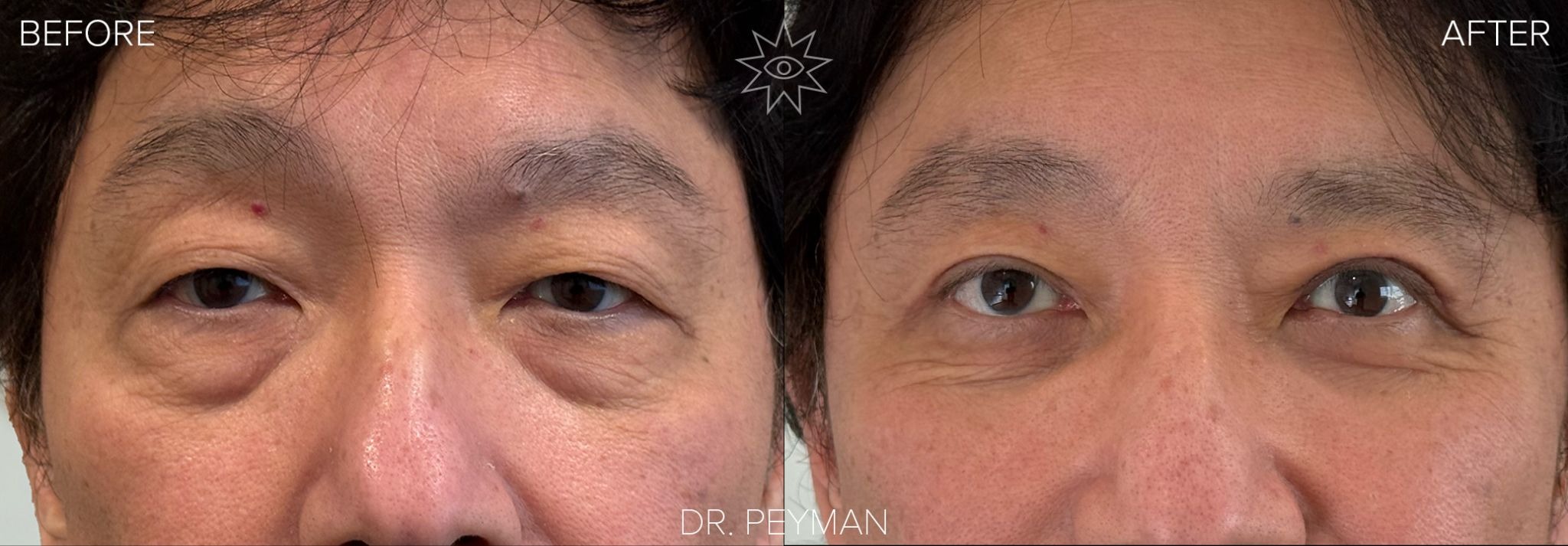
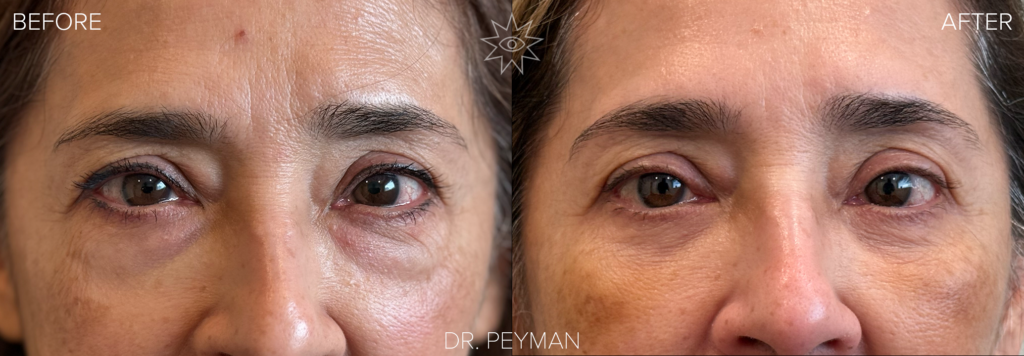
When most people imagine eyelid surgery, they picture weeks of hiding at home with heavy bruising and obvious stitches. In reality, many of Dr. Jason Sabet‑Peyman’s lower eyelid patients are surprised by how quickly they look “public‑ready,” especially when he uses a transconjunctival approach (from the inside of the eyelid).
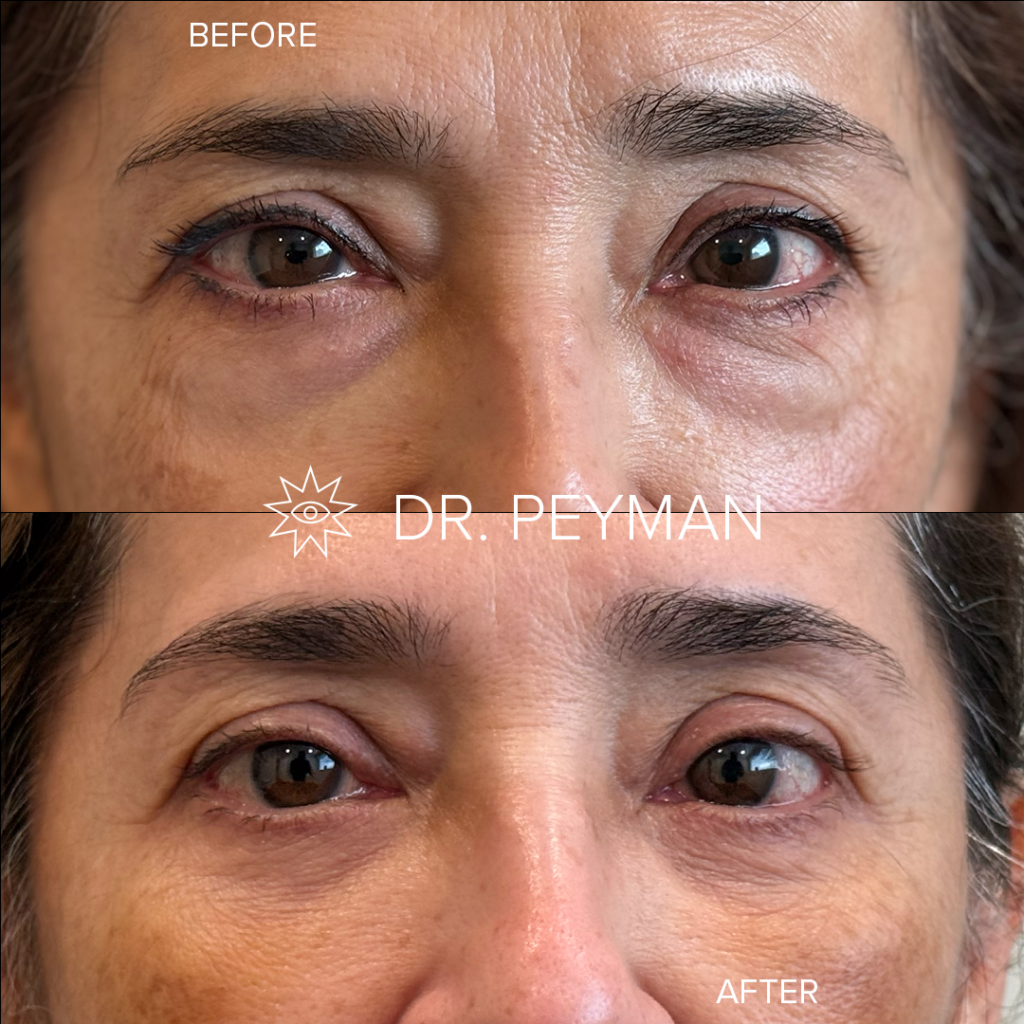
The patient pictured above is just five days out from a transconjunctival lower eyelid blepharoplasty—and already looks noticeably smoother under the eyes, with only mild swelling and no external incision line. For anyone worried about recovery and downtime after surgery, this post is for you.
What makes transconjunctival lower eyelid blepharoplasty different?
Traditional lower lid blepharoplasty often uses an incision just below the lash line. That is still important for patients who need extra skin removed. But when the main problem is under‑eye bags from bulging fat—and the skin itself is in decent shape—a transconjunctival approach lets Dr. Sabet‑Peyman:
- Work through a tiny incision hidden on the inside of the lower eyelid
- Avoid an external skin cut, stitches, and visible scar
- Preserve the natural eyelid support structures and shape
- Reduce swelling and bruising compared with external approaches, which can lead to a faster cosmetic recovery
Studies and clinical experience show that, in properly selected patients, transconjunctival lower blepharoplasty often has milder swelling and a quicker return to normal activities, with most people looking significantly better within the first week or two.
What “day 5” really looks and feels like
Everyone heals at their own pace, but this is a fairly typical picture of day‑5 recovery after transconjunctival lower eyelid blepharoplasty:
- Swelling is still present, but less “puffy” and more even than the first couple of days
- Bruising, if any, is usually light and easily softened with concealer
- The under‑eye contour already looks smoother
- There is no external incision line/scarring to worry about
Most patients at this stage feel comfortable doing light activities, short errands, or remote work, as long as they follow instructions about avoiding bending, straining, or lifting. They may still prefer sunglasses in bright light—but they are usually surprised by how “normal” they already look.
Seeing more than one example
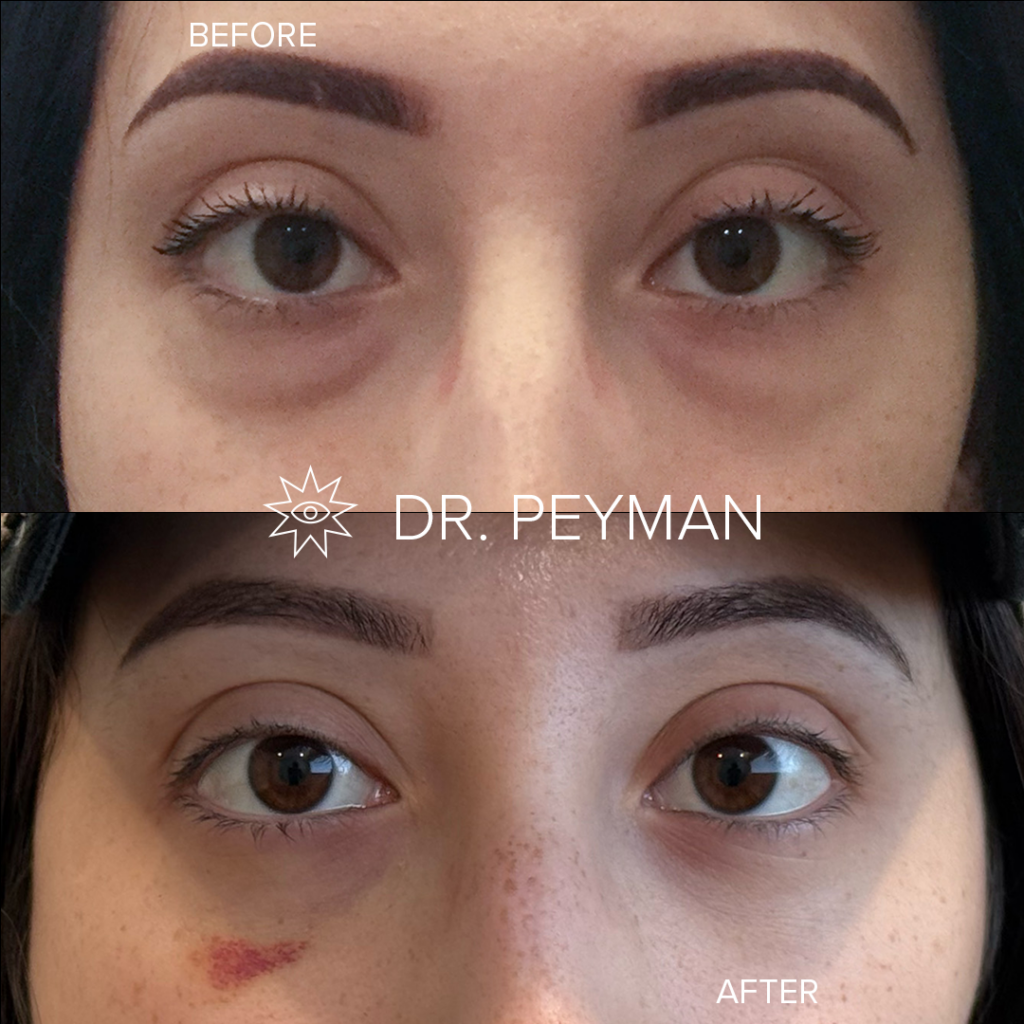
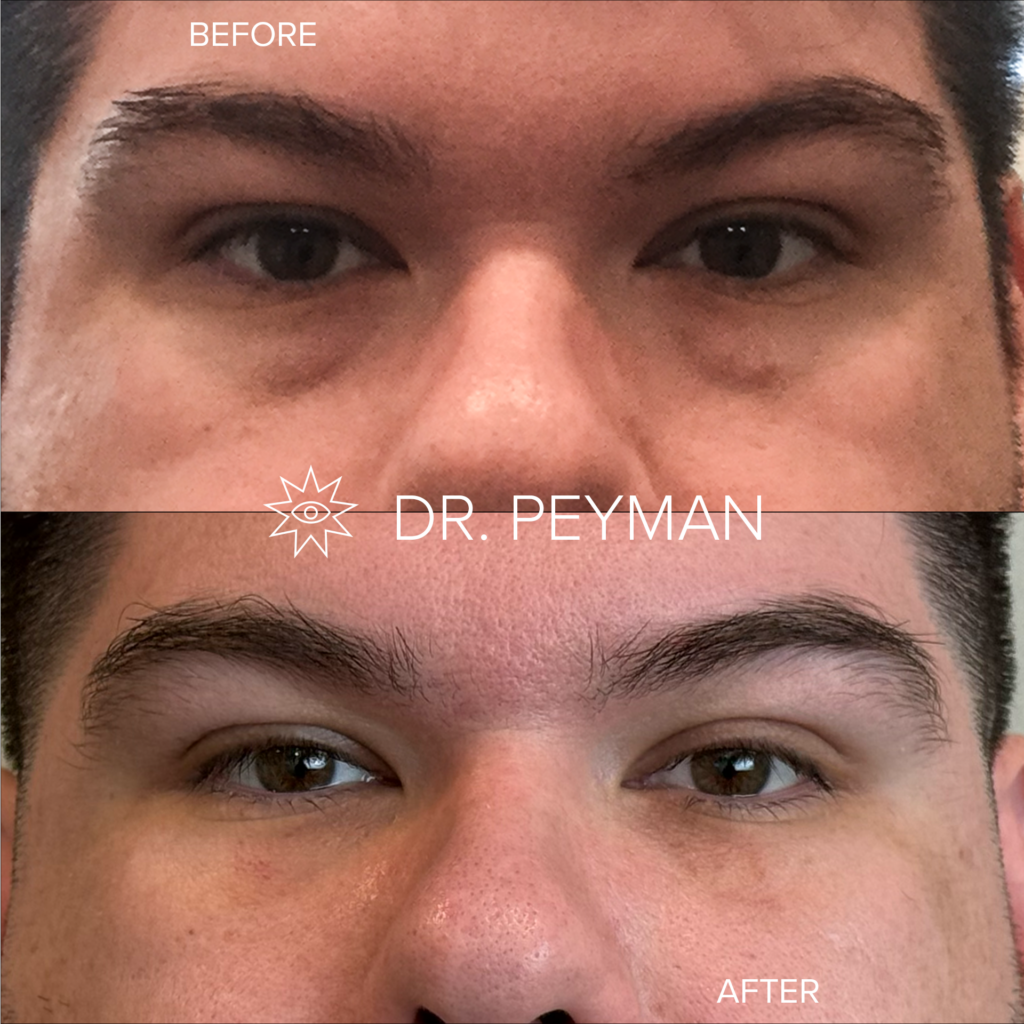
Every face and recovery is a little different, which is why it helps to see more than a single case. Alongside this day‑5 transformation, Dr. Sabet‑Peyman often shares additional before‑and‑after photos from other transconjunctival lower eyelid blepharoplasty patients.
These examples show a range of starting points—mild bags, more advanced puffiness, different ages—and similar themes in recovery: smoother under‑eyes, softer shadows, and natural‑looking results without an obvious “surgery look.” Together, they give you a realistic sense of what this technique can achieve across different patients.
How Dr. Sabet‑Peyman supports a smooth, low‑stress recovery
Minimal downtime is not just about the surgical technique; it is also about preparation and aftercare. In his Fullerton practice, Dr. Jason Sabet‑Peyman and his team focus on:
- Careful patient selection to decide who is a good candidate for transconjunctival lower eyelid blepharoplasty
- Clear, written recovery instructions (cold compresses, eye drops or ointment, sleeping elevated) so you know exactly what to do the first week
- Close follow‑up to answer questions like “Is this amount of swelling normal?” and “When can I go back to work?”
Because the incision is inside the eyelid, there is no external scar to manage, and the risk of certain lid‑position issues can be lower when the eyelid support is preserved. For many people, that combination—hidden incision plus predictable early healing—is what makes the procedure feel more approachable.
Transconjunctival lower eyelid blepharoplasty in Fullerton and Orange County
If under‑eye bags make you look tired or older than you feel, but you are worried about a long, difficult recovery, a transconjunctival lower eyelid blepharoplasty may be worth exploring. It is not right for every patient, but for the right anatomy it can offer powerful under‑eye rejuvenation with minimal downtime and no external lower‑lid scar.
Dr. Jason Sabet‑Peyman is a fellowship‑trained oculofacial plastic surgeon focusing exclusively on eyelid and periocular surgery. From his office in Fullerton, he performs transconjunctival and traditional lower eyelid blepharoplasty, upper eyelid surgery, ptosis repair, and laser resurfacing for patients across Orange County, including Fullerton, Newport Beach, Laguna Beach, Irvine, Yorba Linda, and Huntington Beach.
If you would like to see whether your own “day 5” could look similar, we invite you to schedule a consultation with Dr. Sabet‑Peyman to discuss your under‑eye concerns and review real recovery photos in person.